
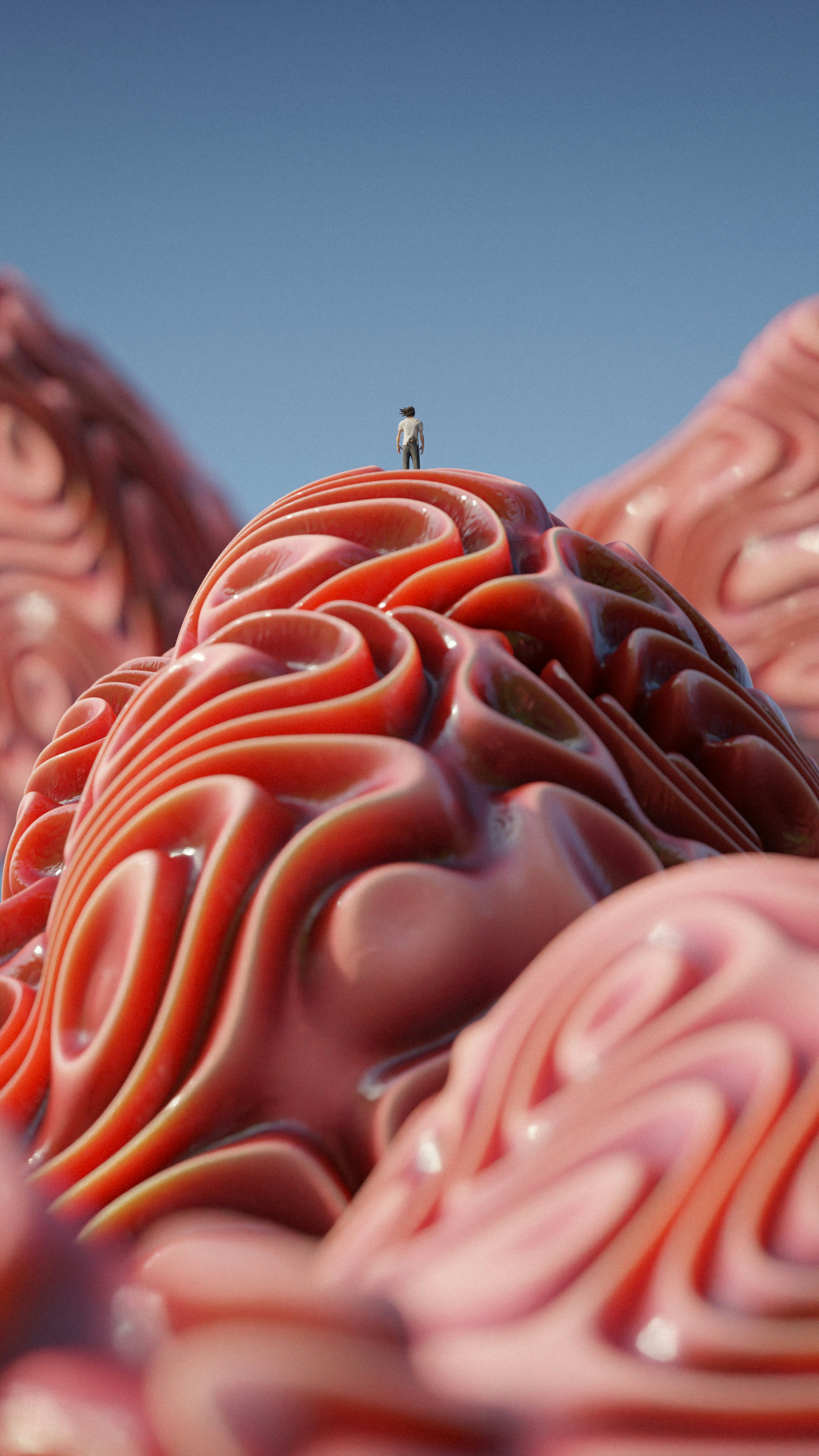
The Subconscious Advantage: How Brands Win Before Logic Begins
Every day, billions of brand decisions are made, often in seconds, often without comparison, and almost never with full awareness.
A buyer scrolls. A logo feels familiar. A message just makes sense.
The decision is already forming long before logic joins the conversation.
For brands competing in crowded, high-stakes markets, this moment beneath awareness is where real advantage is built.
The Silent Reality of Decision-Making
Research consistently shows that up to 95% of human decisions are made subconsciously. These responses happen in milliseconds, driven by emotion, memory, and learned patterns, long before rational evaluation begins.
This explains a familiar experience.
A brand feels right before the buyer can explain why.
Logic does not lead most decisions.
It arrives later, to justify them.
Brands that recognise this shift stop relying on features and pricing alone. Instead, they design experiences that create familiarity, emotional resonance, and trust, becoming the default choice before comparison even starts.
How the Subconscious Actually Chooses Brands
Subconscious decision-making is not random. It follows patterns shaped by psychology, neuroscience, and behavioural cues.
Storytelling Comes Before Specifications
When brands lead with specifications, they speak to logic too late in the process.
Stories enter earlier.
They engage emotion, memory, and meaning, connecting products to purpose, values, and human outcomes. A product becomes more than a solution. It becomes a signal of progress, confidence, or alignment. That meaning stays long after facts fade.
Decisions Are Built Through Micro-Commitments
Few decisions happen all at once.
They unfold through small, low-friction actions such as a free trial, a guided step, or a soft entry point. Each micro-commitment reduces resistance and builds momentum, making the final decision feel natural rather than forced.
Momentum, not pressure, closes the gap.
Design Quietly Directs Choice
What people notice first often determines what they choose.
Visual hierarchy, contrast, spacing, and layout guide attention subconsciously, signalling importance before words are even processed. In high-stakes environments, design does not decorate decisions.
It directs them.
Surprise Creates Memory
Unexpected positive moments, whether a thoughtful interaction, a seamless experience, or a subtle reward, trigger emotional responses that last.
These moments are remembered far longer than routine interactions, shaping preference and loyalty long after the experience ends.
Motivation Systems Reward Progress
Progress indicators, loyalty tiers, and interactive experiences activate the brain’s motivation circuits. When people feel progress, they return. When effort is rewarded, behaviour repeats.
Engagement becomes habit.
Subtle Cues Shape Perception
Colour, language, imagery, and tone influence mood quietly but powerfully. These cues shape perception without conscious effort, guiding decisions while remaining invisible to logic.
The strongest influence is often the least obvious.
Why This Matters Even More in B2B
B2B buyers are not purely rational decision-makers.
They operate under pressure, managing risk, reputation, budgets, and long-term consequences. In these moments, trust and credibility matter as much as performance.
Long before a sales conversation begins, brand impact determines who is considered and who is ignored. Strong brands reduce perceived risk at a subconscious level, narrowing choices before evaluation even starts.
In complex buying journeys, familiarity feels safer, and safety accelerates decisions.
The Neuroscience Behind Brand Impact
Neuromarketing research shows that brand exposure activates emotional, reward, and memory systems before conscious reasoning begins.
Familiar brands feel safer.
Premium brands feel more desirable.
Trusted brands are chosen faster.
Branding does not simply influence perception.
It shapes the mental shortcuts decisions are built on.
The Strategic Takeaway
In today’s market, competitive advantage is not created by louder messaging or more information.
It is created by understanding how people actually decide.
Brands that align with the subconscious do not fight for attention. They earn preference. They do not chase conversions. They design certainty.
And in a world where decisions are made before logic speaks, that understanding becomes the most powerful strategy of all.
Knowledge+

Decoding the Millennial and Gen Z Brain: Neuromarketing for the New Age
The Crucial Tenets of Stellar UX/UI Design: Drawing from World-class Design Gurus

The Renaissance of CX in the Middle East: Why You Need A Dedicated Agency

Decoding Market Research: The Compass Guiding Business Success

Omnichannel Marketing: Bridging the Offline-Online Divide

How Branding & CX are First Cousins
Every day, billions of brand decisions are made, often in seconds, often without comparison, and almost never with full awareness.
A buyer scrolls. A logo feels familiar. A message just makes sense.
The decision is already forming long before logic joins the conversation.
For brands competing in crowded, high-stakes markets, this moment beneath awareness is where real advantage is built.
The Silent Reality of Decision-Making
Research consistently shows that up to 95% of human decisions are made subconsciously. These responses happen in milliseconds, driven by emotion, memory, and learned patterns, long before rational evaluation begins.
This explains a familiar experience.
A brand feels right before the buyer can explain why.
Logic does not lead most decisions.
It arrives later, to justify them.
Brands that recognise this shift stop relying on features and pricing alone. Instead, they design experiences that create familiarity, emotional resonance, and trust, becoming the default choice before comparison even starts.
How the Subconscious Actually Chooses Brands
Subconscious decision-making is not random. It follows patterns shaped by psychology, neuroscience, and behavioural cues.
Storytelling Comes Before Specifications
When brands lead with specifications, they speak to logic too late in the process.
Stories enter earlier.
They engage emotion, memory, and meaning, connecting products to purpose, values, and human outcomes. A product becomes more than a solution. It becomes a signal of progress, confidence, or alignment. That meaning stays long after facts fade.
Decisions Are Built Through Micro-Commitments
Few decisions happen all at once.
They unfold through small, low-friction actions such as a free trial, a guided step, or a soft entry point. Each micro-commitment reduces resistance and builds momentum, making the final decision feel natural rather than forced.
Momentum, not pressure, closes the gap.
Design Quietly Directs Choice
What people notice first often determines what they choose.
Visual hierarchy, contrast, spacing, and layout guide attention subconsciously, signalling importance before words are even processed. In high-stakes environments, design does not decorate decisions.
It directs them.
Surprise Creates Memory
Unexpected positive moments, whether a thoughtful interaction, a seamless experience, or a subtle reward, trigger emotional responses that last.
These moments are remembered far longer than routine interactions, shaping preference and loyalty long after the experience ends.
Motivation Systems Reward Progress
Progress indicators, loyalty tiers, and interactive experiences activate the brain’s motivation circuits. When people feel progress, they return. When effort is rewarded, behaviour repeats.
Engagement becomes habit.
Subtle Cues Shape Perception
Colour, language, imagery, and tone influence mood quietly but powerfully. These cues shape perception without conscious effort, guiding decisions while remaining invisible to logic.
The strongest influence is often the least obvious.
Why This Matters Even More in B2B
B2B buyers are not purely rational decision-makers.
They operate under pressure, managing risk, reputation, budgets, and long-term consequences. In these moments, trust and credibility matter as much as performance.
Long before a sales conversation begins, brand impact determines who is considered and who is ignored. Strong brands reduce perceived risk at a subconscious level, narrowing choices before evaluation even starts.
In complex buying journeys, familiarity feels safer, and safety accelerates decisions.
The Neuroscience Behind Brand Impact
Neuromarketing research shows that brand exposure activates emotional, reward, and memory systems before conscious reasoning begins.
Familiar brands feel safer.
Premium brands feel more desirable.
Trusted brands are chosen faster.
Branding does not simply influence perception.
It shapes the mental shortcuts decisions are built on.
The Strategic Takeaway
In today’s market, competitive advantage is not created by louder messaging or more information.
It is created by understanding how people actually decide.
Brands that align with the subconscious do not fight for attention. They earn preference. They do not chase conversions. They design certainty.
And in a world where decisions are made before logic speaks, that understanding becomes the most powerful strategy of all.
Every day, billions of brand decisions are made, often in seconds, often without comparison, and almost never with full awareness.
A buyer scrolls. A logo feels familiar. A message just makes sense.
The decision is already forming long before logic joins the conversation.
For brands competing in crowded, high-stakes markets, this moment beneath awareness is where real advantage is built.
The Silent Reality of Decision-Making
Research consistently shows that up to 95% of human decisions are made subconsciously. These responses happen in milliseconds, driven by emotion, memory, and learned patterns, long before rational evaluation begins.
This explains a familiar experience.
A brand feels right before the buyer can explain why.
Logic does not lead most decisions.
It arrives later, to justify them.
Brands that recognise this shift stop relying on features and pricing alone. Instead, they design experiences that create familiarity, emotional resonance, and trust, becoming the default choice before comparison even starts.
How the Subconscious Actually Chooses Brands
Subconscious decision-making is not random. It follows patterns shaped by psychology, neuroscience, and behavioural cues.
Storytelling Comes Before Specifications
When brands lead with specifications, they speak to logic too late in the process.
Stories enter earlier.
They engage emotion, memory, and meaning, connecting products to purpose, values, and human outcomes. A product becomes more than a solution. It becomes a signal of progress, confidence, or alignment. That meaning stays long after facts fade.
Decisions Are Built Through Micro-Commitments
Few decisions happen all at once.
They unfold through small, low-friction actions such as a free trial, a guided step, or a soft entry point. Each micro-commitment reduces resistance and builds momentum, making the final decision feel natural rather than forced.
Momentum, not pressure, closes the gap.
Design Quietly Directs Choice
What people notice first often determines what they choose.
Visual hierarchy, contrast, spacing, and layout guide attention subconsciously, signalling importance before words are even processed. In high-stakes environments, design does not decorate decisions.
It directs them.
Surprise Creates Memory
Unexpected positive moments, whether a thoughtful interaction, a seamless experience, or a subtle reward, trigger emotional responses that last.
These moments are remembered far longer than routine interactions, shaping preference and loyalty long after the experience ends.
Motivation Systems Reward Progress
Progress indicators, loyalty tiers, and interactive experiences activate the brain’s motivation circuits. When people feel progress, they return. When effort is rewarded, behaviour repeats.
Engagement becomes habit.
Subtle Cues Shape Perception
Colour, language, imagery, and tone influence mood quietly but powerfully. These cues shape perception without conscious effort, guiding decisions while remaining invisible to logic.
The strongest influence is often the least obvious.
Why This Matters Even More in B2B
B2B buyers are not purely rational decision-makers.
They operate under pressure, managing risk, reputation, budgets, and long-term consequences. In these moments, trust and credibility matter as much as performance.
Long before a sales conversation begins, brand impact determines who is considered and who is ignored. Strong brands reduce perceived risk at a subconscious level, narrowing choices before evaluation even starts.
In complex buying journeys, familiarity feels safer, and safety accelerates decisions.
The Neuroscience Behind Brand Impact
Neuromarketing research shows that brand exposure activates emotional, reward, and memory systems before conscious reasoning begins.
Familiar brands feel safer.
Premium brands feel more desirable.
Trusted brands are chosen faster.
Branding does not simply influence perception.
It shapes the mental shortcuts decisions are built on.
The Strategic Takeaway
In today’s market, competitive advantage is not created by louder messaging or more information.
It is created by understanding how people actually decide.
Brands that align with the subconscious do not fight for attention. They earn preference. They do not chase conversions. They design certainty.
And in a world where decisions are made before logic speaks, that understanding becomes the most powerful strategy of all.
Knowledge+
Decoding the Millennial and Gen Z Brain: Neuromarketing for the New Age
The Crucial Tenets of Stellar UX/UI Design: Drawing from World-class Design Gurus
The Renaissance of CX in the Middle East: Why You Need A Dedicated Agency
Decoding Market Research: The Compass Guiding Business Success
Omnichannel Marketing: Bridging the Offline-Online Divide
How Branding & CX are First Cousins
